Key Takeaways
- Emirates ID readers extract verified identity data in seconds using smart chip reading, OCR scanning, or both — eliminating manual entry and the errors that come with it.
- The right solution depends on your verification volume, deployment environment, integration requirements, and industry-specific compliance needs — not just the feature list on a product page.
- Proper setup, staff training, and ongoing maintenance are what determine whether an Emirates ID reader delivers its full value in real-world operation.
What Is an Emirates ID Reader?

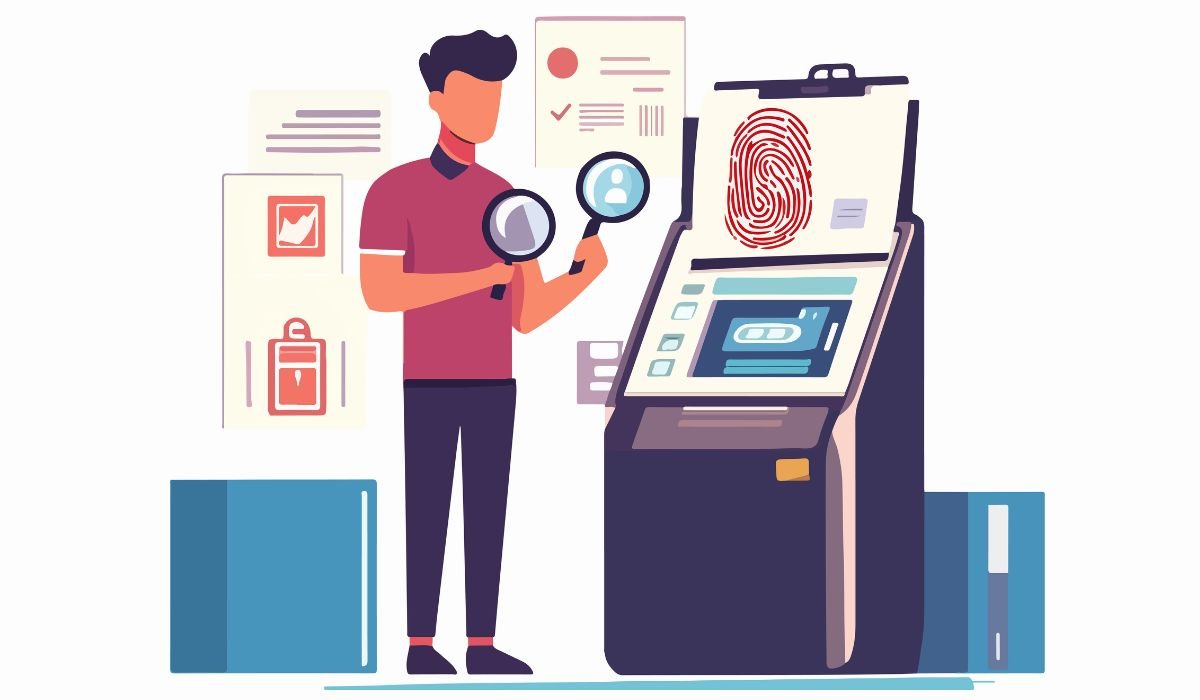
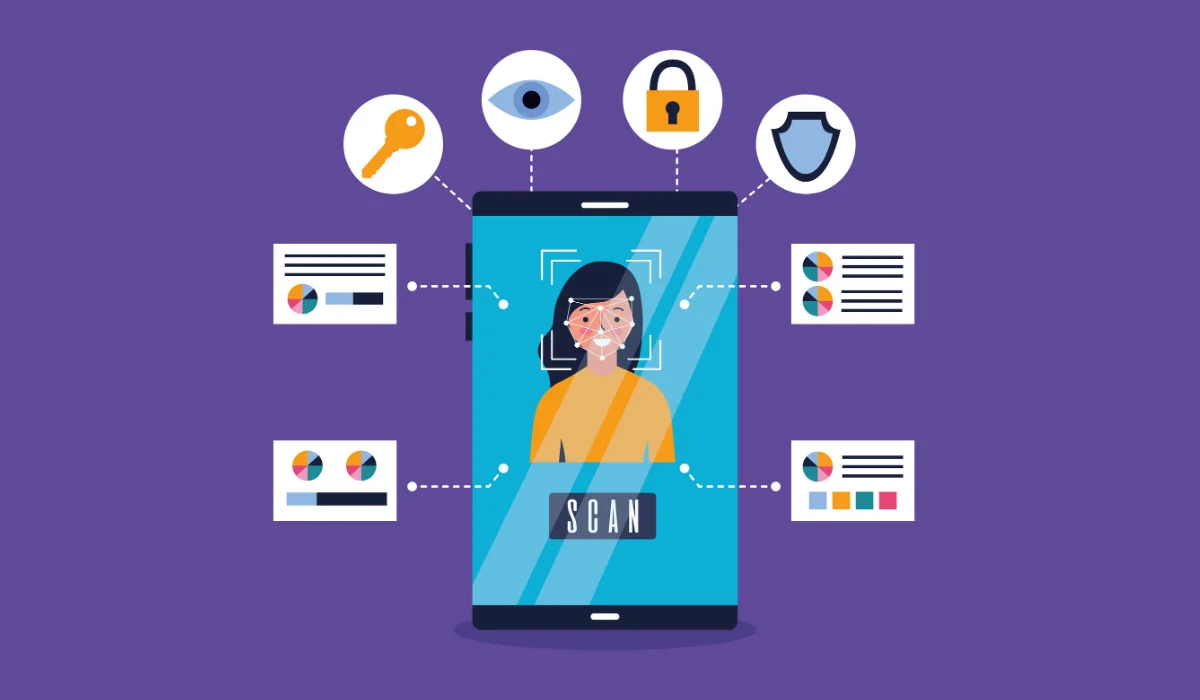
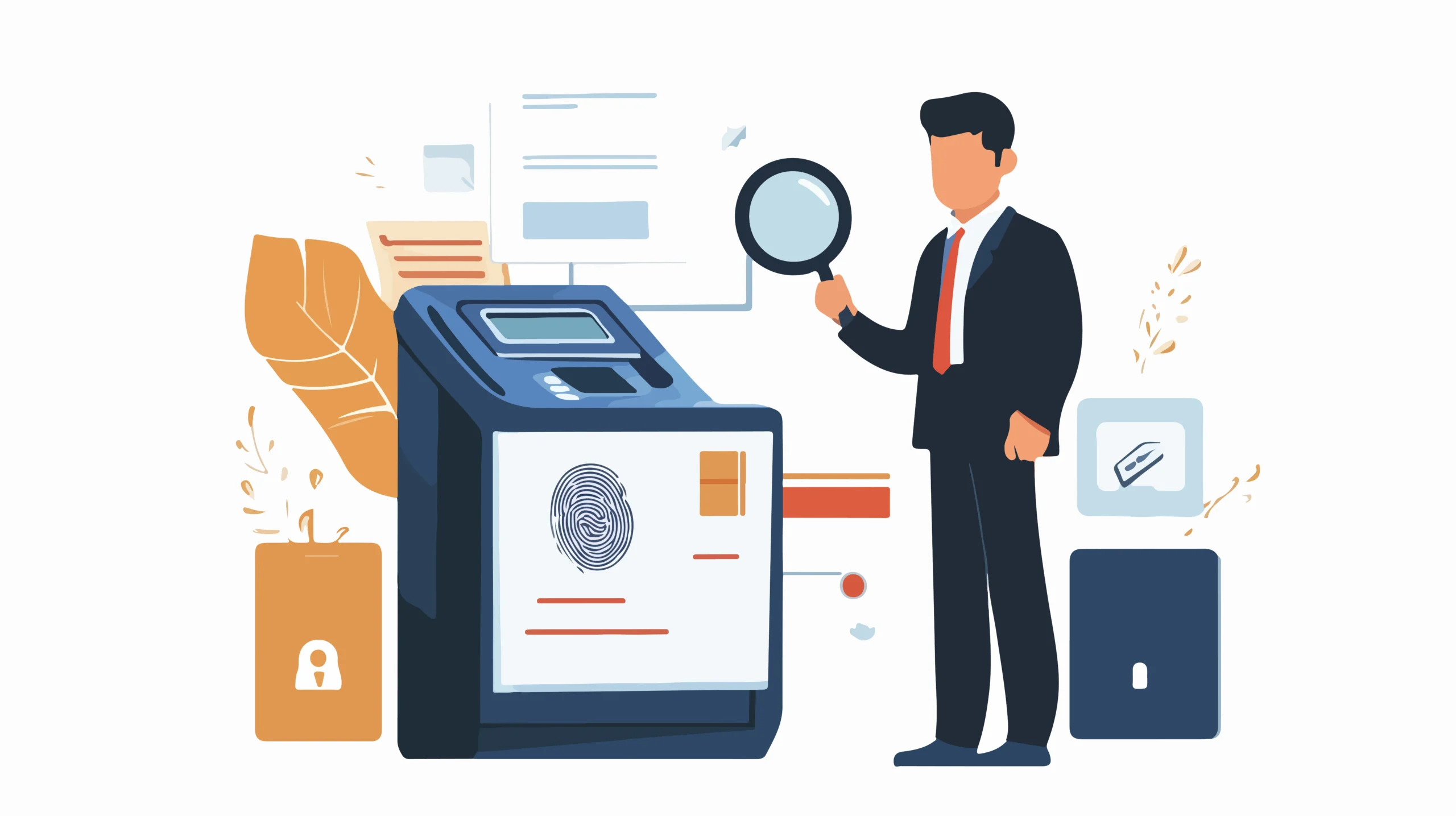
An Emirates ID reader is a hardware device or software solution that reads and extracts data from UAE Emirates ID cards automatically.
It accesses identity information stored on the card — either from the embedded smart chip, the machine-readable zone on the card surface, or both — and transfers that data to connected business systems without manual entry.
The result is fast, accurate, verified identity data captured at the point of contact and available instantly in the systems that need it.
How Does an Emirates ID Reader Work?
Emirates ID readers use two primary methods to extract data. Most modern implementations use both.

1. OCR Scan
Optical Character Recognition scanning reads the text printed on the card surface — including the machine-readable zone at the bottom of the card.
The software identifies and extracts data fields — name, ID number, nationality, date of birth, expiry date — from the visual information on the card.
OCR is fast and works without chip access. It’s the standard fallback when chip reading isn’t available and works across a wide range of hardware.
2. Smart Card / Chip Reader
Smart chip reading accesses the encrypted data stored in the card’s embedded microchip. This is the most accurate and secure method of data extraction.
The chip contains the same fields visible on the card surface — plus additional data including biometric information that isn’t visible to the naked eye.
Chip reading requires compatible hardware and the ICP toolkit issued by the UAE’s Identity and Citizenship Authority. When both are in place, chip reading delivers the highest level of identity verification accuracy available.
Types of Emirates ID Readers
Desktop USB card readers are the most common deployment for fixed-location verification points — bank counters, hospital registration desks, government service windows. They connect via USB, access the card chip directly, and work reliably at high volumes.
NFC and contactless readers use near-field communication to read chip data without physical card insertion. Compatible with modern NFC-enabled smartphones and purpose-built NFC readers. Faster and more convenient for semi-fixed and mobile deployments.
Key Features to Look for in an Emirates ID Reader
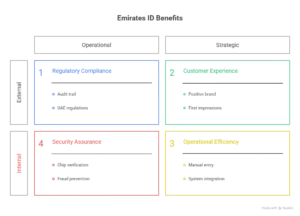
Smart chip reading capability is the most important technical feature. OCR-only solutions miss the security and accuracy benefits that chip-level extraction provides. Chip reading should be a baseline requirement for any serious deployment.
Arabic and English language support must be accurate for both languages — not just English with Arabic as an afterthought. Test Arabic field extraction specifically before committing to any solution.
Real-time validation checks extracted data at the point of capture. Expired cards get flagged. Mismatched fields get caught. Verification failures are identified before data enters your systems.
System integration via API or SDK connects the reader to your existing CRM, HRMS, ERP, or other platforms. Data captured once should flow everywhere it’s needed automatically.
KYC and compliance support generates the documentation and audit trails required in regulated industries. Essential for banking, financial services, healthcare, and any sector with formal identity verification requirements.
Audit trail and logging maintains a timestamped record of every verification. Required for regulatory compliance and internal audit purposes.
Data encryption protects captured identity data both in transit and at rest. Non-negotiable given the sensitivity of the information being processed.
UAE Pass compatibility supports digital identity verification alongside physical card scanning — important as digital ID adoption grows across the UAE.
Multi-device and multi-location support manages verification across multiple sites and device types from a single platform.
Benefits of Using Emirates ID Readers

1. Streamlined Customer Onboarding
Manual data entry at onboarding slows everything down. Two to three minutes per customer adds up fast across high volumes.
Emirates ID reading completes data capture in seconds. Onboarding workflows that used to take ten minutes take two. Customer throughput increases without adding staff.
2. Enhanced Security and Fraud Prevention
The Emirates ID chip contains encrypted data that’s extremely difficult to forge. Software that reads chip data verifies card authenticity in real time.
Fake or tampered documents that pass a visual check get caught at the chip level. Expired cards are flagged automatically. Your business is protected without slowing down legitimate customers.
3. Improved Efficiency and Productivity
Every minute saved on identity verification is a minute staff can spend on higher-value work. Across a team processing hundreds of verifications a day, that time adds up to real operational capacity.
Automated data capture also eliminates the time spent correcting manual entry errors — errors that often surface hours or days after they were made.
4. Seamless System Integration
Identity data is only useful if it goes somewhere. Emirates ID reader solutions that integrate with your CRM, HRMS, or ERP ensure verified data flows directly into the systems that need it.
One scan. Data everywhere it’s required. No manual transfer, no duplicate entry, no isolated verification records sitting in a separate system.
5. Customizable Features for Different Business Needs
Different industries have different verification requirements. A bank needs KYC documentation. A hospital needs patient record linkage. A hotel needs guest registration records.
Good Emirates ID reader software supports configuration for different use cases — workflows, data fields, integration mappings, and compliance requirements — without requiring a separate product for each.
6. Regulatory Compliance Made Easy
UAE regulations require identity verification and record retention across banking, healthcare, hospitality, real estate, and more. Manual processes struggle to maintain the consistency and documentation standards regulators expect.
Emirates ID reader software captures verified data automatically and maintains a complete audit trail — making compliance a natural output of normal operations rather than a separate administrative task.
7. Versatility Across Industries
The same core technology — read, extract, validate, transfer — applies across banking, healthcare, government, hospitality, retail, education, and corporate environments.
The workflows and integration points differ by industry. The underlying value is consistent across all of them.
8. Positive Brand Image and Customer Experience
Fast, smooth identity verification signals that your business takes efficiency seriously. Customers and visitors notice when a process is professional and quick.
The contrast with slow, manual data entry is immediate. First impressions matter, and identity verification is often the first interaction a customer has with your business.
9. Faster Identity Verification Across UAE Sectors
Whether it’s a bank processing account applications, a hospital registering patients, or a government centre serving citizens — speed of identity verification directly affects service capacity.
Emirates ID readers increase throughput at every verification point without requiring more staff or longer operating hours.
10. Reduced Manual Data Entry and Human Errors
Every manual data entry is a potential error. Transposed digits, misspelled names, missed fields — these mistakes create downstream problems that take time and effort to identify and fix.
Automated extraction from the Emirates ID removes that error source entirely. What’s on the card is what enters your system. Every time.
Key Benefits for Visitor Management Specifically
Visitor management is one of the strongest use cases for Emirates ID readers. When a visitor arrives, their Emirates ID is scanned at reception. A visitor record is created automatically — name, ID number, photo, purpose of visit, time of arrival.
No forms to fill out. No staff manually entering details. No illegible handwriting in a paper visitor log.
The record is accurate, timestamped, and searchable. Access permissions can be assigned automatically based on the verification. The visitor log is available instantly for security, compliance, or emergency purposes.
Customer Onboarding and KYC Verification
For regulated businesses, Emirates ID scanning transforms the onboarding process. Identity data is captured accurately at the first interaction. KYC checks run against that data automatically. Required documentation is generated without manual preparation.
What used to take twenty minutes of form-filling and manual verification takes minutes — with higher accuracy and better compliance documentation than the manual process ever produced.
Combining ID Readers with ID Card Printing
Some deployments combine Emirates ID scanning with in-house ID card production. Verified Emirates ID data populates the employee or visitor card automatically — eliminating manual data entry in the card printing process.
The issued card matches verified identity records exactly. No typos, no mismatched photos, no cards printed with incorrect information.
Other Technologies That Work Alongside Emirates ID Readers
Emirates ID readers integrate with facial recognition systems to add biometric verification alongside document verification. They connect with access control systems to grant or restrict entry based on verified identity. They feed queue management platforms with customer data so visitors are routed to the right service point automatically. And they link with HR systems for attendance management and employee onboarding workflows.
Industries That Benefit Most from Emirates ID Readers
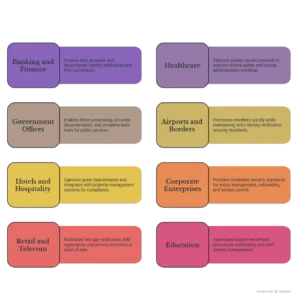
Banking and Financial Services
Identity verification and KYC compliance are legal requirements for every customer interaction in UAE banking. Emirates ID readers ensure that verification is fast, accurate, and fully documented — meeting regulatory standards consistently without slowing down customer service.
Healthcare
Patient identification accuracy affects clinical safety. An Emirates ID reader at registration captures patient details precisely, links to existing records, and reduces administrative workload — so clinical staff spend more time on care and less on paperwork.
Government Offices and Public Sector
High citizen volumes, strict compliance requirements, and the need for accurate records make Emirates ID readers a natural fit for government service delivery. Faster processing, accurate documentation, and complete audit trails all improve with automated verification.
Airports and Border Control
Speed and security are both non-negotiable in aviation and border environments. Emirates ID scanning processes travellers quickly while maintaining the identity verification standards that security protocols demand.
Hotels and Hospitality
UAE hospitality regulations require guest identity verification and record retention. Emirates ID scanning at check-in captures required data instantly, integrates with property management systems, and creates a complete guest record automatically.
Corporate Offices and Enterprises
Visitor management, employee onboarding, and access control across multiple sites all benefit from Emirates ID scanning. Centralised identity verification management across locations provides consistent security standards and full reporting visibility.
Retail and Telecommunications
Age verification, loyalty programme enrollment, SIM registration, and service activation all require identity verification. Emirates ID readers make these processes fast and compliant — removing friction at the point of sale without compromising verification standards.
Education
Student enrollment, examination attendance verification, and staff identity management all benefit from automated Emirates ID scanning. Accurate records, reduced administrative workload, and reliable attendance tracking improve across the institution.
How Emirates ID Readers Are Transforming Identity Verification Across UAE Sectors
The shift from manual to automated identity verification in the UAE is accelerating across every sector.
Three forces are driving it simultaneously. Regulatory requirements around identity verification are tightening. Customer expectations for fast, smooth service are rising. And technology has made automated verification accessible to businesses of almost any size.
The result is a fundamental change in how identity verification works. What used to be a slow, manual process requiring dedicated staff time is becoming a near-instant, automated step in a broader digital workflow.
Businesses that have made this shift report faster customer processing, fewer errors, lower compliance risk, and better employee productivity. Those still relying on manual processes are increasingly at a disadvantage — operationally, competitively, and from a compliance standpoint.
Emirates ID Card Reader Setup and Installation Guide
Confirm hardware compatibility before purchasing. Not all card readers work with the ICP toolkit required for chip reading. Use hardware that is officially certified for Emirates ID use. Your software vendor should provide a confirmed compatibility list.
Install the ICP toolkit from the official UAE Identity and Citizenship Authority portal. This is required for chip-level reading and must be installed before the card reader software. Keep the toolkit version current — updates are issued when Emirates ID specifications change.
Install card reader drivers. Download the correct driver version for your hardware model and operating system. Install before connecting the reader hardware.
Connect the reader hardware and verify it’s detected by the operating system. Open device manager to confirm the reader is recognised and no driver errors are present.
Common Emirates ID Reader Problems and How to Fix Them
Card not detected is the most frequent issue. Check the card is inserted correctly with the chip contact facing the reader. Verify the USB reader is connected and powered. Check device manager for driver errors. Restart the reader service.
Reader service not running causes silent failures where the software appears active but doesn’t respond to card presentation. Open system services and confirm the Emirates ID reader service is running. Set it to start automatically with the operating system.
ICP toolkit errors usually indicate a version mismatch between the toolkit and the installed reader drivers. Uninstall both, download the latest versions from the official ICA portal, and reinstall in the correct sequence — drivers first, toolkit second.
Expired ID handling should flag the card and capture the data — not block the scan entirely. Configure your workflow to alert staff to the expiry while still extracting the identity data for the interaction.
OCR accuracy issues on worn or older cards can often be improved by cleaning the card reader lens or camera, improving lighting at the scan point, and ensuring the card is positioned flat against the reader surface.
Arabic field extraction errors are usually a software configuration issue rather than a hardware problem. Verify that Arabic language support is enabled in your software settings and that the correct character encoding is configured.
Frequently Asked Questions
What is an Emirates ID reader used for?
To automatically extract, validate, and process identity data from UAE Emirates ID cards. Used for customer onboarding, KYC compliance, employee attendance, visitor management, access control, and any process requiring accurate identity verification.
How does an Emirates ID reader work?
A card reader or NFC device accesses data from the card’s smart chip or MRZ strip. The software extracts identity fields, validates them in real time, and transfers verified data to connected business systems automatically — without manual entry.
What is the difference between OCR and smart chip reading?
OCR reads data from the text printed on the card surface. Smart chip reading accesses encrypted data stored in the card’s embedded microchip. Chip reading is more secure and more complete — providing data not visible on the card surface, including biometric information.
Which industries use Emirates ID readers the most?
Banking and financial services, healthcare, government and public sector, aviation and border control, hospitality, corporate offices, retail, telecoms, and education. Any industry with identity verification requirements benefits from automated Emirates ID reading.
Can Emirates ID readers integrate with other business systems?
Yes. Modern Emirates ID reader solutions connect with CRM, HRMS, ERP, access control, and other platforms via API or SDK. Verified identity data flows directly into connected systems without manual transfer.
What is the ICA Agent and do I need it?
The ICA Agent — also referred to as the ICP toolkit — is software issued by the UAE’s Identity and Citizenship Authority that enables card reader hardware to communicate with the Emirates ID chip. It’s required for chip-level reading. Without it, your software can only access surface data via OCR.
How do I troubleshoot an Emirates ID reader that stopped working?
Start with the basics — check the USB connection, verify the reader service is running, and confirm no driver errors appear in device manager. If chip reading has failed, check the ICP toolkit version and update if necessary. If OCR accuracy has dropped, check the card surface and reader lens for dirt or obstruction.
Conclusion
Emirates ID readers have moved from a convenience to a compliance and operational necessity for most UAE businesses. Manual identity verification can’t keep pace with regulatory requirements, customer expectations, or the volume of verifications modern businesses process.
The right Emirates ID reader — properly set up, correctly integrated, and maintained — delivers immediate and lasting improvements in speed, accuracy, compliance, and customer experience.
At EBR, we help UAE businesses select, implement, and support Emirates ID reader solutions that fit their specific operation — from initial requirements assessment through to integration, deployment, and ongoing maintenance.