Key Takeaways
- AI, mobile check-ins, and virtual queues are shaping the next era of customer flow.
- Smart systems will help businesses handle crowds before they turn into long lines.
- EBR gives companies an easy path to adopt modern queuing trends without complexity.
Emerging Trends Shaping the Future of Queue Management Systems
1. AI-Powered Queue Management
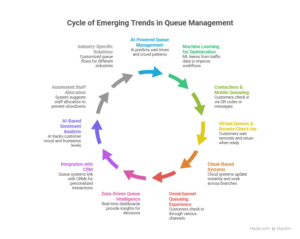
AI predicts wait times, understands crowd patterns, and spots delays before they grow. It helps businesses stay ahead instead of reacting last minute.
2. Machine Learning for Continuous Optimization
Machine learning studies daily traffic and learns from it. Over time, it suggests faster workflows and smarter routing decisions on its own.
3. Contactless & Mobile Queueing (QR, SMS, WhatsApp)
Customers can join a queue without touching a kiosk. A quick scan or message lets them check in from anywhere.
4. Virtual Queues & Remote Check-Ins
People no longer need to stand in line physically. They can wait wherever they feel comfortable and return when their turn approaches.
5. Cloud-Based Queue Management Systems
Cloud systems update instantly, work across branches, and don’t require heavy IT setups. They fit growing businesses easily.
6. Omnichannel Queueing Experience
Customers can check in from apps, websites, kiosks, or service desks. No matter how they enter, the system syncs everything smoothly.
7. Data-Driven Queue Intelligence
Real-time dashboards display wait times, traffic peaks, service speed, and bottlenecks. This helps managers make faster decisions.
8. Integration with CRM & Customer Profiles
Queue systems link with CRMs so staff can greet customers with the right information already on screen. It facilitates a more efficient, personal interaction.
9. AI-Based Sentiment Analysis & Customer Behavior Tracking
AI reads feedback, patterns, and customer behavior to understand mood and frustration levels. This helps businesses improve how they handle queues.
10. Automated Staff Allocation & Workload Balancing
The system suggests when to add more staff or shift workload to prevent slowdowns. This keeps service steady even during rush hours.
11. Industry-Specific Smart Queue Solutions
Each industry has unique needs. Hospitals, banks, retail stores, and government offices will use customized queue flows made just for their work style.
What the Future Queue Experience Will Look Like
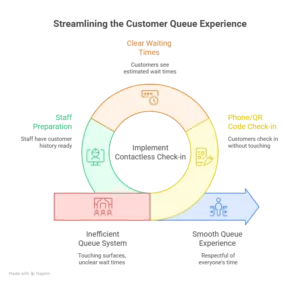
Customers will walk into a place and check in without touching anything — maybe through their phone or a QR code near the entrance. They’ll see clear waiting times and choose whether to wait inside or step out. Staff will already have the customer’s history on their screen and will prepare before the person reaches the counter. The entire flow will feel smoother and more respectful of everyone’s time.
Challenges and Considerations for the Next Generation of Queue Systems
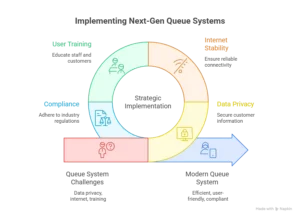
There are questions which come along with the new technology. The businesses have to juggle between data privacy, internet stability, and user training. Older customers may take time to adjust to digital check-ins. Some industries also need stricter compliance rules. The goal is to adopt modern tools without overwhelming staff or confusing customers.
How Businesses Can Prepare for the Future of Queue Management
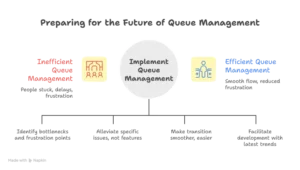
Start by understanding your current flow — the places where people are stuck, where delays show up, and where frustration is building. After that, search for tools that alleviate those precise issues rather than going after features that you do not need. Training staff early and choosing a system that’s easy to use will make the transition smoother. A software that is highly adaptable will facilitate the development with the latest trends.
Conclusion
Queue management is heading toward a world where waiting feels almost invisible. Instead of crowded lines and unsure customers, businesses will run on clearer data, faster responses, and smarter automation. Tools like EBR Software make this future more accessible by offering simple, modern features that help both staff and customers move through the day with less stress and more clarity.