Key Takeaways
- The Emirates ID card reader software facilitates identity verification without requiring manual work, it can automatically retrieve and extract data from the card and validate it instantly at the same time the data is transferred to the receiving systems.
- Successful implementation depends on choosing the right hardware, verifying integration compatibility, testing Arabic language extraction, training staff properly, and establishing clear data retention policies before going live.
- The right solution depends on your specific verification volume, compliance requirements, integration needs, and growth plans — not just the feature list on a vendor’s website.
What Is Emirates ID Card Reader Software?

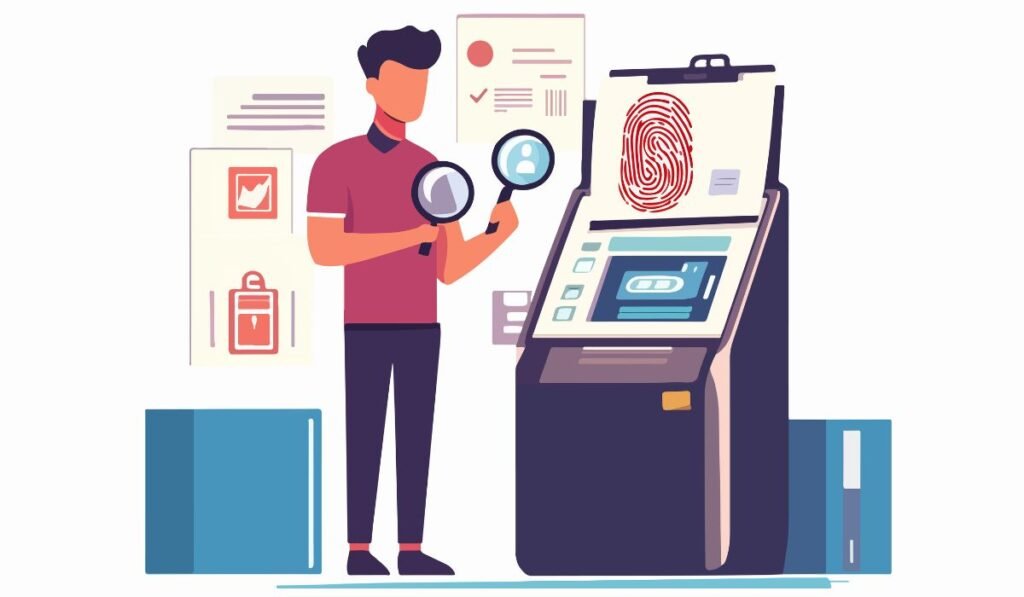
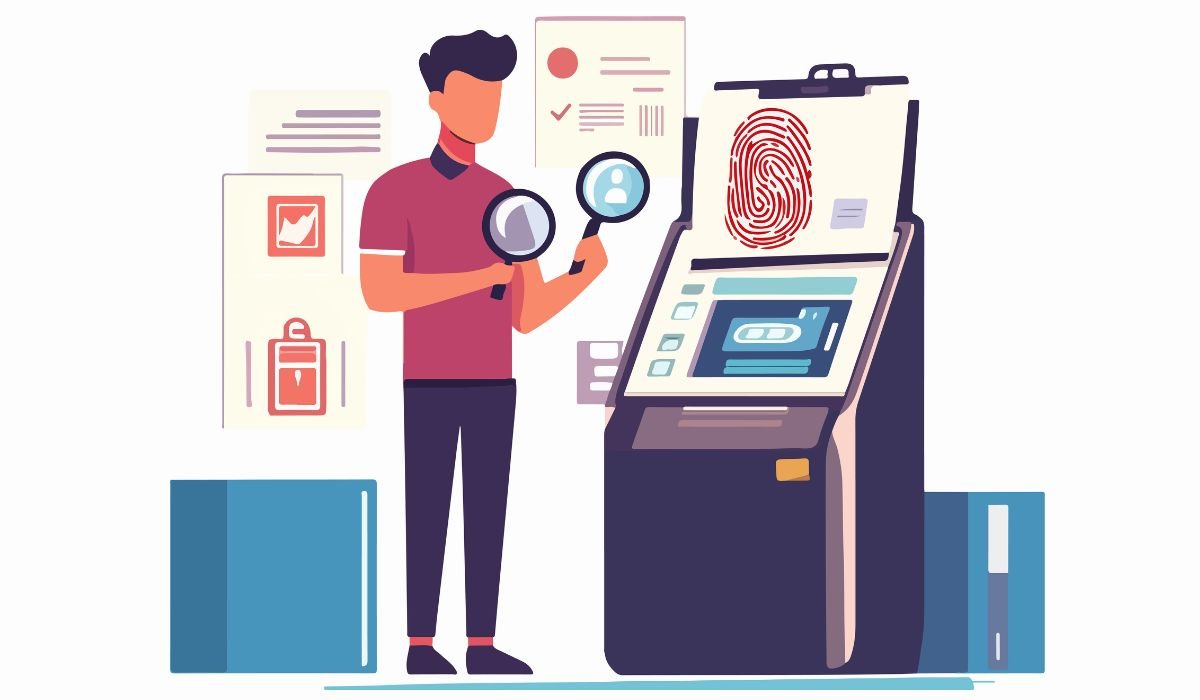
The Emirates ID card reader software is an automatic system to extract, process and capture data from the UAE Emirates ID cards digitallly.
It obtains data by reading the card’s integrated smart chip, the machine-readable zone on the card surface, or combines both and the result will depend on the reader type and software capability.
The extracted data is then validated in real time and pushed into connected business systems — CRM, HRMS, ERP, or other platforms — without manual entry.
How Does Emirates ID Card Reader Software Work?
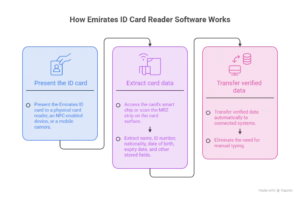
The process happens in seconds and follows a straightforward sequence.
The Emirates ID card is presented to a reader — either a physical card reader, an NFC-enabled device, or a mobile camera depending on the deployment type.
The software accesses the card’s smart chip or scans the MRZ strip on the card surface. Data is extracted — name, ID number, nationality, date of birth, expiry date, and other fields stored on the card.
Verified data is then transferred automatically to connected systems — eliminating the need for anyone to type it manually.
Types of Emirates ID Readers
Hardware-based smart card readers are physical devices that connect to a computer or kiosk via USB. They access the card’s embedded chip directly — providing the most accurate and secure data extraction available. This is the standard deployment for fixed-location verification points.
NFC and contactless readers use near-field communication technology to read chip data without physical card insertion. Compatible with NFC-enabled smartphones and modern card readers. Fast and convenient for mobile and semi-fixed deployments.
Mobile and portable readers turn smartphones or tablets into card readers using built-in cameras or attached NFC capability. Ideal for field verification, mobile onboarding, and locations where fixed hardware isn’t practical.
Key Features of Emirates ID Card Reader Software
OCR and MRZ data extraction reads the machine-readable zone on the card surface to capture all visible data fields quickly and accurately — even when chip reading isn’t available.
KYC and AML compliance tools support the identity verification workflows required in regulated industries. Generates the documentation and audit trails that compliance frameworks demand.
System integration capabilities via API and SDK connect the software to your existing business platforms so verified data flows where it’s needed automatically.
Audit trail and reporting maintains a complete, timestamped log of every verification for regulatory compliance and internal audit purposes.
Modules of Emirates ID Reader Software
The employee attendance module uses Emirates ID scanning to record attendance automatically — eliminating manual timesheets and proxy attendance issues. Records link directly to HR and payroll systems.
The reporting and analytics tool is capable of presenting different types of reports related to the number of verifications, the number of documents found suspicious, the time of processing, and the level of compliance, enabling management to have a complete picture of identity verification operations throughout the organization.
As systems continue to evolve, the connection between Emirates ID software and other business platforms is managed by the system integration module; it ensures that data flows correctly, mappings stay updated, and integrations don’t get interrupted.
Key Benefits of Emirates ID Card Reader Software

1. Faster Customer and Visitor Processing
Manual identity data entry takes two to three minutes per person at minimum. Emirates ID scanning takes seconds.
In high-volume environments — banks, hospitals, government offices — that speed difference is significant. Queues shorten. Staff handle more customers in the same time. Service capacity increases without adding headcount.
2. Improved Data Accuracy
Human data entry introduces errors. Transposed digits, misspelled names, missed fields — these mistakes create downstream problems in records, compliance filings, and customer accounts.
Emirates ID reader software extracts data directly from the card. What’s on the card is what enters your system. No typos, no missed fields, no corrections needed later.
3. Effortless UAE Legal and Regulatory Compliance
Identity verification and KYC requirements apply across banking, healthcare, hospitality, government services, and more. Manual processes struggle to maintain the accuracy and documentation standards regulators expect.
Emirates ID reader software captures verified data automatically, generates a complete audit trail, and maintains records in a format that meets UAE regulatory requirements — without anyone having to manually maintain compliance documentation.
4. Paperless Operations and Better Record-Keeping
Physical forms, photocopies, and filing systems create storage costs, retrieval delays, and compliance risk. Digital capture eliminates all of it.
Every verification is recorded digitally, stored securely, and retrievable instantly. Records are always current, always complete, and always accessible to authorised staff.
5. Enhanced Security and Fraud Prevention
Emirates ID cards contain encrypted chip data that’s extremely difficult to forge. Software that reads chip data verifies card authenticity in real time — catching fake or tampered documents that a visual check would miss.
Expired cards are flagged automatically. Mismatched chip and surface data is detected immediately. Your business is protected from identity fraud without slowing down legitimate customers.
6. Better Customer and Employee Experience
Standing in front of a staff member while they manually type your details feels outdated. Instant scanning feels professional and efficient.
For employees, automated attendance recording via Emirates ID removes the friction of manual sign-in processes. For customers, faster processing and less waiting creates a noticeably better experience.
7. Seamless Integration with Business Systems
Data captured by Emirates ID reader software is only useful if it goes somewhere. Integration with CRM, HRMS, ERP, and other platforms ensures verified data flows directly into the systems that need it.
One scan. Data everywhere it’s needed. No manual transfer, no duplicate entry, no data sitting isolated in a separate verification system.
8. Real-Time Data Validation
Validation at the point of capture means errors are caught immediately — before they enter your systems and create downstream problems.
An expired ID is flagged before a service is provided. A mismatched field is caught before a record is created. Problems that would have taken hours to identify and fix in manual processes are resolved in real time.
9. Cost and Time Savings Across Operations
The cumulative time saving across high-volume identity verification operations is substantial. Less time on data entry, less time correcting errors, less time managing paper records, less time preparing compliance documentation.
Those hours translate directly into cost reduction and increased operational capacity.
Applications of Emirates ID Card Reader Software

Access Control and Security
Emirates ID scanning at building entrances creates a verified access log automatically. Only individuals with valid, unexpired IDs gain entry. Records of who entered, when, and for how long are maintained without manual effort.
Employee Attendance Management
Replacing manual attendance sheets with Emirates ID scanning eliminates proxy attendance, reduces payroll errors, and creates accurate, tamper-proof attendance records that integrate directly with HR and payroll systems.
Visitor Management
Visitors scan their Emirates ID on arrival. A visitor record is created automatically, a badge can be printed, and access permissions are assigned based on the verification. The full visitor log is available instantly for security and compliance purposes.
Customer Onboarding and KYC
Banks, financial services firms, telecoms providers, and other regulated businesses use Emirates ID scanning to accelerate customer onboarding. Identity data is captured accurately, KYC checks run automatically, and documentation is generated without manual intervention.
Combining ID Readers with ID Card Printing
Some deployments combine Emirates ID scanning with in-house ID card printing. The verified Emirates ID data populates the employee or visitor ID card automatically — eliminating manual data entry in the card production process and ensuring issued IDs match verified identity records.
Other Technologies That Work Alongside Emirates ID Readers
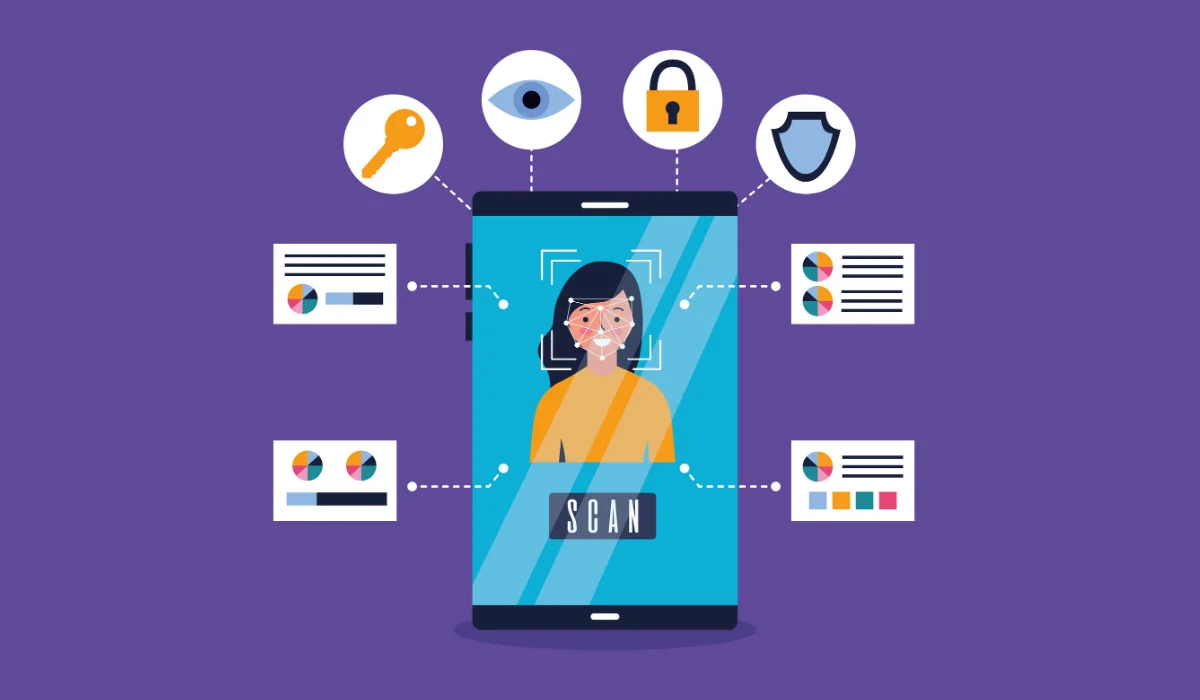
Emirates ID reader software integrates with a range of complementary technologies. Facial recognition systems add a biometric verification layer. Queue management platforms use scanned ID data to route customers to the right service point. Access control systems grant or restrict entry based on verified identity. HR platforms receive attendance and onboarding data automatically.
Industries That Use Emirates ID Card Reader Software in UAE

Banks and Financial Services
KYC compliance, account opening, and ongoing identity verification requirements make Emirates ID reader software a core operational tool for UAE banks and financial institutions. Regulatory obligations around identity verification are strict — and manual processes don’t meet the standard consistently.
Healthcare Facilities and Clinics
Patient identification accuracy is fundamental to safe healthcare. Emirates ID scanning at registration creates accurate patient records, links to existing files, and reduces front-desk administrative burden — letting clinical staff focus on care rather than paperwork.
Hotels and Hospitality
UAE hospitality regulations require guest identity verification and record retention. Emirates ID scanning at check-in captures required data instantly, creates a complete guest record automatically, and integrates with property management systems.
Government and Public Sector
Government service centres processing large volumes of citizens benefit significantly from automated identity verification. Faster processing, accurate records, and complete audit trails support both service delivery and regulatory compliance.
Corporate Offices and Enterprises
Large organisations use Emirates ID reader software for employee onboarding, visitor management, and access control across multiple sites. Centralised management of identity verification across locations provides consistent security standards and reporting visibility.
Real Estate and Appraisal Firms
Identity verification of buyers, sellers, tenants, and landlords is required at multiple points in UAE real estate transactions. Emirates ID scanning ensures accurate records and compliance with UAE real estate regulatory requirements.
Educational Institutions and Training Facilities
Student enrollment, examination attendance, and staff management all benefit from automated identity verification. Emirates ID scanning creates accurate records and removes the manual workload from administrative staff.
Telecommunications and Service Providers
Telecoms providers are legally required to verify customer identity for SIM registration and service activation. Emirates ID scanning makes this process fast, accurate, and fully compliant with UAE regulatory requirements.
Retail and Customer-Facing Businesses
Retailers offering age-restricted products, loyalty programmes with identity requirements, or regulated services use Emirates ID scanning to verify customers quickly without creating friction at the point of sale.
Implementation Process of Emirates ID Card Reader Software
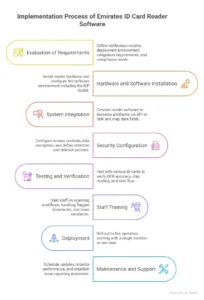
Step 1: Evaluation of Requirements
Define your verification volume, deployment environment, integration requirements, and compliance needs before evaluating any software. The right implementation depends entirely on what your business actually needs.
Map every point where identity verification happens in your operation. Each touchpoint may have different requirements — fixed counter, mobile, kiosk, or self-service.
Step 2: Hardware and Software Installation
Install the appropriate reader hardware at each verification point. Configure the software environment, including the ICP toolkit if chip reading is required. Verify that all hardware drivers are current and correctly installed before proceeding.
Step 3: System Integration
Connect the Emirates ID reader software to your existing business platforms via API or SDK. Map data fields between the ID reader output and your target systems. Test data flow end-to-end before going live.
Step 4: Security Configuration
Configure role-based access controls so only authorised staff can access verification records and system settings. Set up data encryption for stored and transmitted identity data. Define data retention periods and deletion policies.
Step 5: Testing and Verification
Test with a range of actual Emirates ID cards — including older cards, recently issued cards, and cards in varying conditions. Verify OCR accuracy, chip reading capability, Arabic field extraction, and validation logic. Test integration data flow to all connected systems.
Step 6: Staff Training
Train every staff member who will use the system. Cover the basic scanning workflow, how to handle flagged documents, what to do when a card fails verification, and how to escalate issues. Don’t go live until your team is confident.
Step 7: Deployment
Roll out to live operation. Start with a single location or use case if possible — get it working correctly before expanding. Monitor closely in the first week for any issues that didn’t surface in testing.
Step 8: Maintenance and Support
Schedule regular software updates to keep pace with Emirates ID specification changes and security patches. Monitor system performance. Establish a clear process for reporting and resolving issues. Review your implementation as business needs evolve.
Prerequisites Before Installing Emirates ID Reader Software
A compatible smart card reader or NFC-enabled device is required for chip-based reading. USB card readers must be compatible with the ICP smart services toolkit.
The ICP toolkit — issued by the UAE’s Identity and Citizenship Authority — must be installed for chip reading capability. This toolkit provides the interface between the card reader hardware and the software.
Compatible operating system and hardware specifications must be met. Check vendor requirements before purchase to avoid compatibility issues after installation.
Quick Troubleshooting Guide for Emirates ID Reader Software
Card not detected is the most common issue. Check that the card is inserted correctly with the chip facing the right direction. Verify the reader is connected and powered. Restart the reader service if the connection appears active but the card isn’t being read.
Reader service not running causes the software to fail silently. Open your system services, locate the Emirates ID reader service, and confirm it’s running. Set it to start automatically to prevent recurrence.
Expired ID handling should be configured to flag rather than reject. An expired card still contains valid identity data. Your workflow should capture the data and flag the expiry for staff to handle — not block the scan entirely.
Driver and toolkit update issues occur when the ICP toolkit version doesn’t match the installed reader drivers. Uninstall both, download the latest versions from the official ICP portal, and reinstall in the correct order — drivers first, toolkit second.
What Businesses Should Consider Before Buying Emirates ID Reader Software
Volume of verifications processed determines the deployment type and licensing model that makes sense. Low-volume operations have different requirements from high-volume environments with hundreds of daily verifications.
Industry-specific compliance requirements vary significantly. Banking and financial services face stricter KYC and AML requirements than retail. Healthcare has patient data regulations. Make sure your chosen solution meets the specific compliance framework your industry operates under.
Mobile verification needs affect hardware choice. If staff verify identities in the field, at events, or across multiple sites without fixed counters — mobile capability is a requirement, not a nice-to-have.
Integration with existing systems is where many implementations succeed or fail. Confirm compatibility with your specific CRM, HRMS, ERP, or other platforms before purchasing. Don’t assume integration is possible — verify it.
Common Mistakes to Avoid When Implementing Emirates ID Reader Software
Buying without defining requirements leads to the wrong solution. Define your verification volume, deployment environment, integration needs, and compliance requirements before evaluating any vendor.
Skipping integration testing before go-live creates expensive problems after deployment. Test data flow to every connected system with real Emirates ID data before launching.
Not testing Arabic language extraction is a mistake that surfaces quickly in production. Verify Arabic field accuracy specifically — don’t assume it works because the vendor says it does.
Frequently Asked Questions
What is an Emirates ID reader used for?
To extract, validate, and process identity data from UAE Emirates ID cards automatically. It’s used for customer onboarding, KYC compliance, employee attendance, visitor management, access control, and any business process that requires accurate identity verification.
How does Emirates ID card reader software work?
A card reader or NFC device accesses data from the card’s embedded chip or MRZ strip. The software extracts relevant data fields, validates them in real time, and transfers verified data to connected business systems automatically.
What is the ICP toolkit and why do I need it?
The ICP toolkit is software issued by the UAE’s Identity and Citizenship Authority that enables card reader hardware to communicate with the Emirates ID chip. It’s required for chip-level data reading. Without it, your software can only access surface data via OCR scanning.
Do I need to install the reader service every day?
No. Once configured correctly, the reader service runs automatically with your operating system. If it requires daily manual restart, there’s a configuration issue that needs to be resolved — not a normal part of daily operation.
Conclusion
Emirates ID card reader software has moved from a convenience to a compliance necessity for most UAE businesses. Manual identity verification is too slow, too error-prone, and too difficult to document to meet modern regulatory and operational standards.
The right solution extracts data accurately, validates it in real time, integrates cleanly with your systems, and creates the audit trail your compliance framework requires.
At EBR, we help UAE businesses implement Emirates ID reader software that fits their specific operation — from requirements assessment and hardware selection through to integration, deployment, and ongoing support.